
By Daniel Taylor
Yesterday, Keir Starmer announced his intention to step down as Prime Minister, setting in motion the process to elect a new Labour leader. On the same day, Andy Burnham was sworn in as MP for Makerfield following his decisive by-election victory last week.
Burnham has confirmed that he will stand in the leadership contest and, with several potential rivals, including Wes Streeting, already backing his candidacy, he has quickly emerged as the overwhelming favourite to succeed Starmer. Indeed, if no other candidate secures sufficient nominations to force a full contest, Burnham could become Labour leader and Prime Minister as early as mid-July. If that happens, what might a Burnham premiership mean for Wales?
Burnham’s personal and political ties to Wales
Andy Burnham’s connections to Wales are both personal and political. Politically, Burnham has developed strong relationships with Welsh leaders throughout his time as Mayor of Greater Manchester. He worked closely with the Welsh Government, North Wales local authorities and partners across the Irish Sea on shared priorities such as transport connectivity, energy, economic development and regional growth. These relationships gave him regular exposure to Welsh political and policy debates, while reinforcing the importance of cross-border collaboration between Wales and north-west England.
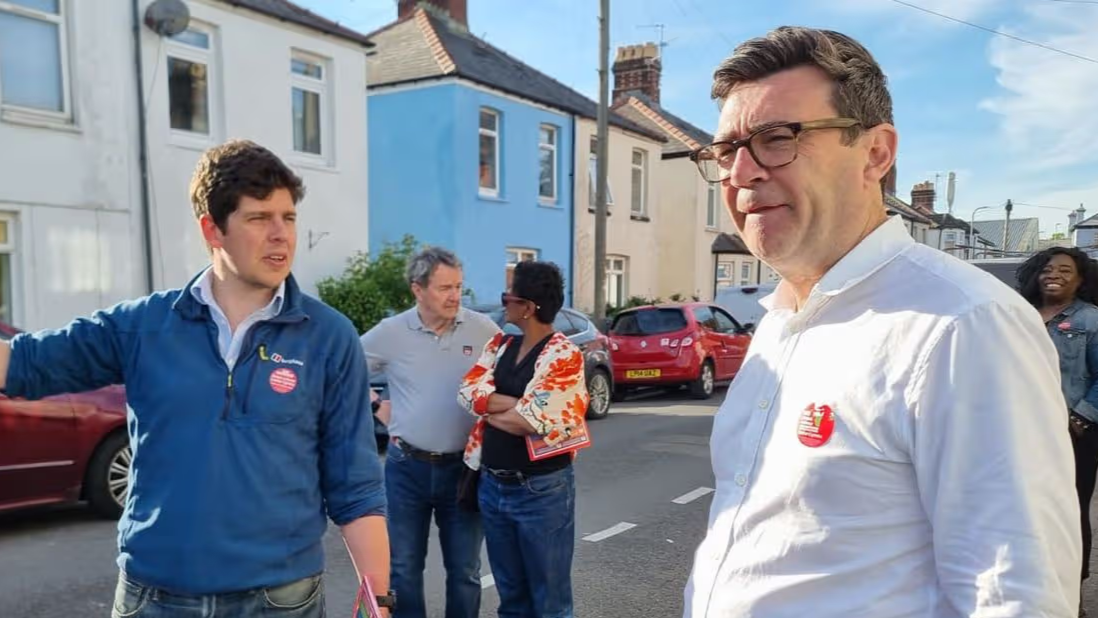
With his daughter attending university in Cardiff, Burnham has also spent considerable time in Wales in recent years, combining family visits with a visible presence on the campaign trail for Welsh Labour. Most recently, he joined candidates campaigning across four south Wales constituencies during the 2026 Senedd election.
These personal and professional links mean Burnham would enter Downing Street with a deeper familiarity with Wales, its political landscape and its policy challenges than recent prime ministers.
What would Burnham’s approach to devolution be?
Burnham brings a distinctive perspective to devolution, having experienced it from both sides of the relationship. As an MP, minister and shadow minister in Westminster, he worked with devolved administrations across policy areas including health, culture, education and the economy. As Mayor of Greater Manchester, he also experienced the challenges of negotiating with central government as a devolved leader.
Throughout his mayoralty, Burnham was frequently outspoken about what he saw as the limitations of Westminster’s approach to devolution, arguing that Whitehall departments should do more to embrace and empower devolved institutions. His political philosophy of “Manchesterism” places devolution at the heart of economic and social renewal, reflecting a belief that decisions are often best made closer to the communities they affect.
This suggests a Burnham-led government would pursue a more collaborative and respectful relationship with devolved administrations, including the Welsh Government.
How far could Burnham go on devolution to Wales?
While the scale of any constitutional reform programme remains uncertain, Burnham has consistently supported a significant deepening of devolution across the UK.
In 2023, he joined former Prime Minister Gordon Brown and then First Minister Mark Drakeford in supporting the Alliance for Radical Democratic Change, a campaign established to advance proposals set out in the Commission on the UK’s Future. Burnham endorsed the commission’s central recommendation on Wales: that there is “no constitutional reason” why powers devolved to Scotland could not also be devolved to Wales.
The commission recommended devolving responsibility for Jobcentre Plus, youth justice and probation, as part of a wider pathway towards the devolution of justice and policing. As these areas were subsequently referenced in UK Labour’s 2024 General Election manifesto, they could provide the most politically viable starting point for a Burnham government’s devolution agenda in Wales.
Burnham has also backed replacing the House of Lords with a “Senate of the Nations and Regions”, reflecting his long-standing belief that the UK’s political institutions should better represent the interests of devolved governments and regional leaders.
How might Burnham work with a Plaid Cymru-led Welsh Government?
A key question would be how a Burnham-led UK Government would work with a Plaid Cymru-led Welsh Government under First Minister Rhun ap Iorwerth.
While they would come from different political traditions, there are good reasons to expect a constructive relationship. Both have championed greater devolution and place-based economic development, and there is likely to be significant overlap on issues such as tackling poverty, improving skills, driving investment and pursuing further constitutional reform. Ap Iorwerth has already indicated the approach he would take to relations with a Burnham premiership, calling for a “new relationship with Westminster” and promising “constructive” engagement.
Burnham’s own experience is particularly relevant. For most of his time as Mayor of Greater Manchester, he worked with Conservative governments in Westminster while pursuing Greater Manchester’s interests. That experience of governing as a devolved leader under a politically different UK administration will give him a greater appreciation of the challenges facing Cardiff Bay and the importance of maintaining productive intergovernmental relationships. As a result, a Burnham premiership could see a more pragmatic and partnership-driven approach to UK-Welsh Government relations than has often been the case in recent years.